If you’ve been looking for a way to jumpstart your fitness journey, a 30-day challenge might be the perfect place to start.
While it’s true that forming a new habit can take an average of 66 days—and sometimes even longer—30 days is a manageable timeframe to begin building consistency and momentum. It’s not overwhelming, and it provides a clear, achievable goal. Plus, by committing to just 30 days, you’re setting the stage to continue for another 30 days and beyond, making fitness a lasting part of your lifestyle.
Table of Contents
- Why 30 Days?
- The Focus: Finding Exercises You Enjoy
- The Structure of a 30-Day Fitness Challenge
- What is Japanese Interval Walking?
- Why Include Swimming in Your Challenge?
- What Makes a Good Exercise Challenge?
- How to Challenge Yourself Safely
- Why Challenge Yourself?
- Tips for Staying Motivated During the Challenge
- Deep Dive Podcast
- Related Question
Read on as we will outline why 30 days is an ideal starting point, how to structure your fitness challenge, and why focusing on exercises you enjoy is key to long-term success.
We’ll also provide tips for challenging yourself safely and effectively, so you can build strength, endurance, and confidence in just one month.
And for those looking for variety, we’ll include unique options like swimming and Japanese interval walking to keep things fun and engaging.
Why 30 Days?
1. A Manageable Commitment
Thirty days is long enough to see real progress but short enough to feel achievable. It’s a timeframe that doesn’t feel intimidating, making it easier to commit fully.
While research shows that forming a habit can take anywhere from 18 to 254 days depending on the person, behavior, and context, the average is around 66 days.
A 30-day challenge is a great stepping stone to get you started. If you can stick with it for one month, you’ll build a foundation of consistency that can carry you forward into the next 30 days and beyond.
2. Build Momentum
The first step in any fitness journey is often the hardest. By committing to 30 days, you’re giving yourself a chance to overcome initial hurdles, such as lack of motivation or unfamiliarity with exercise routines. Once you’ve completed the first month, you’ll likely feel more confident and motivated to keep going.
3. See Results Quickly
While long-term fitness goals may take months or even years to achieve, a 30-day challenge allows you to see noticeable improvements in a short period of time. Whether it’s increased energy, improved strength, or better endurance, these small wins can fuel your motivation to keep moving forward.
The Focus: Finding Exercises You Enjoy
One of the keys to success in a 30-day fitness challenge is choosing activities you genuinely enjoy. Exercise shouldn’t feel like a chore—it should be something you look forward to. When you enjoy the process, you’re far more likely to stick with it.
Here’s why enjoyment matters:
Consistency is key:
You’re more likely to exercise regularly if you love what you’re doing.
Sustainability:
Finding joy in movement makes it easier to continue beyond the 30 days.
Mental health benefits:
Exercise you enjoy can boost your mood, reduce stress, and improve overall mental well-being.
The Structure of a 30-Day Fitness Challenge
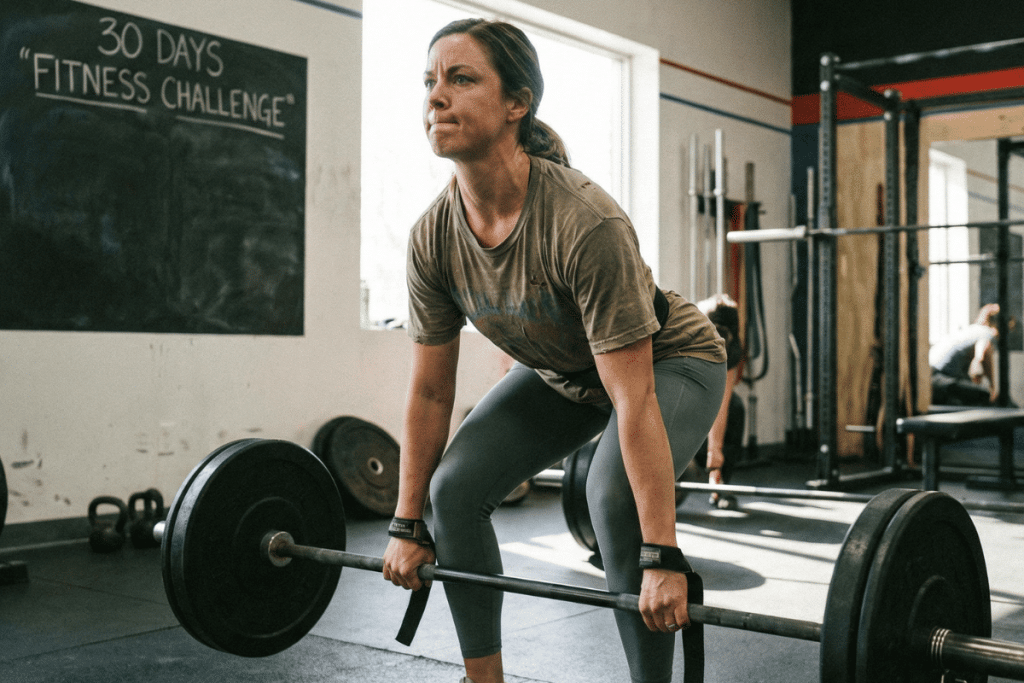
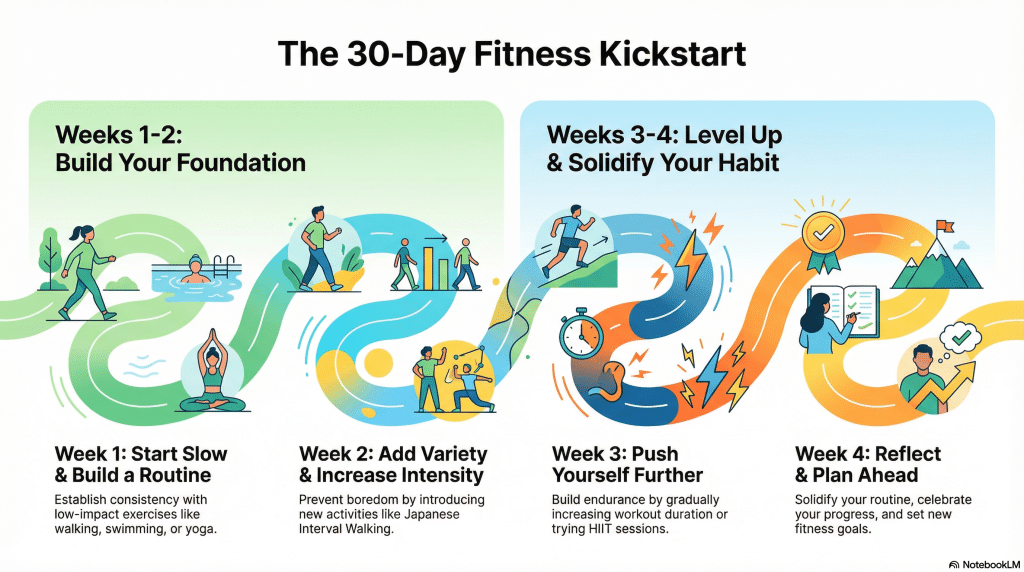
To make your 30-day challenge effective and enjoyable, it’s important to have a clear plan. The focus should be on exercising 5 to 6 days per week for 45 minutes per day. Here’s how to structure your challenge:
Week 1: Start Slowly and Build a Routine
Goal:
Establish consistency and get your body used to regular movement.
Activities:
Start with low-impact exercises like walking, swimming, or yoga to ease into the routine.
Try light strength training or bodyweight exercises to build a foundation.
Tips:
Focus on proper form to avoid injury.
Schedule your workouts at the same time each day to build a habit.
Week 2: Add Variety and Increase Intensity
Goal:
Prevent boredom and challenge your body in new ways.
Activities:
Incorporate swimming for a full-body, low-impact workout that improves cardiovascular fitness and strengthens muscles.
Try Japanese interval walking, which alternates between slow and fast walking for short bursts, making it an effective and accessible cardio workout.
Add strength training with resistance bands or light weights.
Tips:
Use music or workout apps to make your sessions more engaging.
Track your progress to see how far you’ve come.
Week 3: Push Yourself Further
Goal:
Build endurance and strength by challenging yourself.
Activities:
Gradually increase the duration or intensity of your workouts. For example, swim for longer distances or add more intervals to your Japanese walking routine.
Incorporate high-intensity interval training (HIIT) sessions to boost cardiovascular fitness.
Focus on compound exercises like squats, lunges, and push-ups to work multiple muscle groups.
Tips:
Listen to your body and rest if needed, but don’t shy away from pushing your limits.
Stay hydrated and fuel your body with nutritious foods to support your workouts.
Week 4: Solidify Your Routine and Reflect
Goal:
Make exercise a regular part of your life and prepare for the next month.
Activities:
Continue to mix up your workouts to keep things interesting.
Set new goals for the next 30 days, such as swimming a specific distance or improving your pace during Japanese interval walking.
Tips:
Reflect on how far you’ve come and celebrate your progress.
Plan your workouts for the next month to maintain momentum.
What is Japanese Interval Walking?
Japanese interval walking, also known as “fast-slow walking,” is a simple yet highly effective form of exercise. It alternates between slow walking and bursts of fast, high-intensity walking. This technique improves cardiovascular health, burns calories, and builds endurance without the high impact of running.
How to Do It:
- Start with a 2-minute warm-up at a comfortable walking pace.
- Walk as fast as you can for 30 seconds to 1 minute.
- Slow down to a relaxed pace for 1 to 2 minutes.
- Repeat this cycle for 20 to 30 minutes.
Japanese interval walking is ideal for all fitness levels because you can adjust the intensity and duration of each interval based on your ability.
Why Include Swimming in Your Challenge?
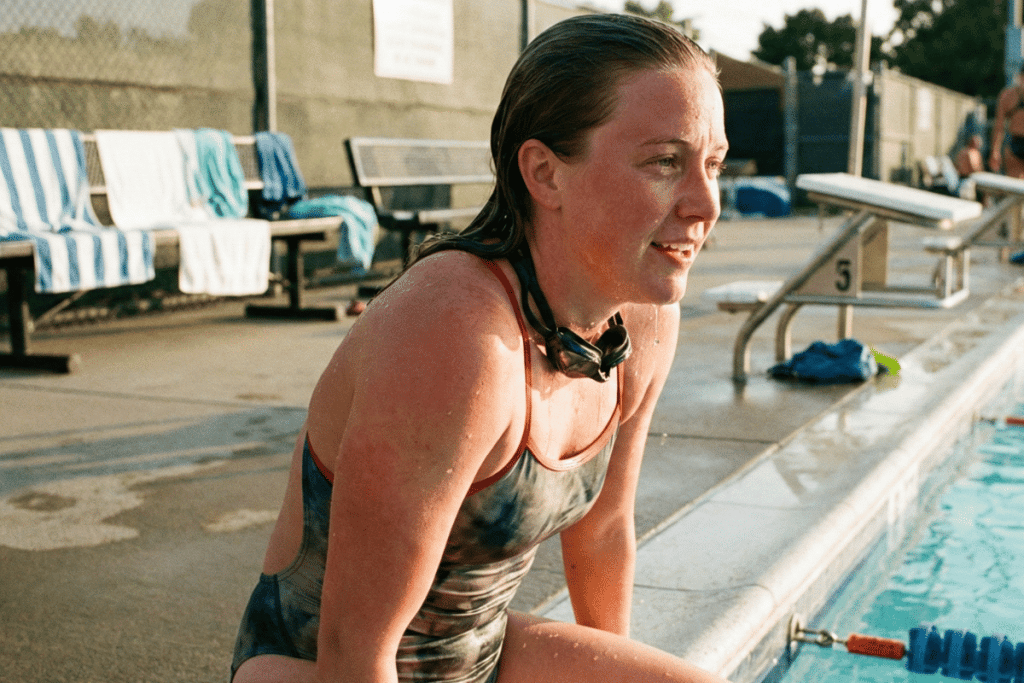
Swimming is one of the best full-body workouts you can do. It’s low-impact, making it ideal for people of all fitness levels, including those with joint issues.
Swimming works your arms, legs, core, and cardiovascular system, all while being gentle on your body.
Benefits of Swimming:
- Burns calories efficiently.
- Builds muscle strength and endurance.
- Improves flexibility and posture.
- Reduces stress and promotes relaxation.
How to Incorporate Swimming:
- Start with 20-30 minutes of swimming at a comfortable pace.
- Gradually increase your distance or speed each week.
- Mix up your strokes (freestyle, breaststroke, backstroke) to target different muscle groups.
What Makes a Good Exercise Challenge?
A successful fitness challenge should be:
1. Achievable
Set realistic goals that match your current fitness level. For example, if you’re new to exercise, start with shorter workouts and gradually increase the intensity.
2. Flexible
Life can be unpredictable, so it’s important to have a plan that allows for adjustments. If you miss a day, don’t give up—just pick up where you left off.
3. Balanced
Your challenge should include a mix of cardio, strength training, and flexibility exercises to work your entire body and prevent overuse injuries.
4. Challenging
While it’s important to start at a level that feels comfortable, don’t be afraid to push yourself as the challenge progresses. Growth comes from stepping outside your comfort zone.

How to Challenge Yourself Safely
Challenging yourself is an important part of any fitness journey, but it’s equally important to do so safely. Here are some tips:
Listen to your body:
Pay attention to how you feel during and after workouts. If something doesn’t feel right, stop and adjust.
Warm up and cool down:
Start each session with a warm-up to prepare your body and end with a cool-down to aid recovery.
Progress gradually:
Increase intensity, duration, or resistance slowly to avoid injury.
Rest and recover:
Take at least one rest day per week to allow your body to recover and prevent burnout.
Why Challenge Yourself?
Challenging yourself during a fitness journey is essential for growth and progress. Here’s why:
Builds Confidence:
Overcoming challenges helps you feel stronger and more capable.
Prevents Plateaus:
Pushing yourself ensures that your body continues to adapt and improve.
Boosts Motivation:
Achieving small milestones along the way keeps you motivated to keep going.
Tips for Staying Motivated During the Challenge
Set Clear Goals:
Define what you want to achieve in 30 days, whether it’s weight loss, increased strength, or improved endurance.
Track Your Progress:
Use a journal, app, or calendar to record your workouts and celebrate your achievements.
Find a Workout Buddy:
Exercising with a friend can make workouts more fun and keep you accountable.
Reward Yourself:
Treat yourself to non-food rewards, like new workout gear or a relaxing massage, for reaching milestones.
Focus on the Benefits:
Remind yourself of the physical and mental benefits of exercise, such as better sleep, reduced stress, and more energy.
A 30-day fitness challenge is a powerful way to jumpstart your fitness journey, build healthy habits, and see real results in a short amount of time. By focusing on exercises you enjoy, like swimming or Japanese interval walking, challenging yourself, and committing to consistency, you’ll set the foundation for a healthier, more active lifestyle.
Remember, the key to success is not perfection—it’s persistence. Even if you miss a day or face setbacks, keep going. The progress you make in 30 days can be the beginning of a lifelong commitment to wellness.
So, are you ready to take on the challenge? Start today, and discover just how strong and capable you truly are!
Deep Dive Podcast
Check out our Deep Dive Podcast.
Reluctant Low Carb Life explores all aspects of keto and low-carb lifestyle, fitness, health, wellness, and aging gracefully. At the Reluctant Low Carb Life, we strive to give honest and accurate information to people trying to live the low-carb and keto lifestyle while improving their fitness and health.
We have a free monthly newsletter that is filled with information and helps you remain updated. Subscribe to the Reluctant Low Carb Life newsletter by clicking here.
Listen to our weekly podcast, Reluctant Low Carb Life, on all the major podcast platforms by clicking here.
Follow us on Instagram and Facebook by clicking here.
Related Question
20 Reasons Why Swimming Is A Great Sport
We love swimming because it provides a low-impact, full-body workout that engages almost all your muscles while improving cardiovascular fitness and mental well-being. Swimming helps with weight management, enhances flexibility and posture, boosts breathing efficiency, and promotes relaxation. It’s a versatile activity suitable for all ages and fitness levels, making it easy to incorporate into your fitness regimen.
You can read more about 20 Reasons Why Swimming Is A Great Sport by clicking here.
Using MySwimPro App to Help Improve Your Swimming
Swimming, in its essence, can be a rather monotonous sport. You dive in, swim back and forth, and repeat. Without any form of stimulation or structure, it’s easy for the sport to become dull and unengaging. I’ve tried to make my swimming sessions more enjoyable by using headsets like the Ex Trainer, allowing me to listen to music or podcasts while I swim. This game-changer has made my time in the water much more pleasant. However, for those who don’t have access to headsets, swimming can quickly turn into a repetitive routine of laps.
You can read more about Using MySwimPro App to Help Improve Your Swimming by clicking here.
Swimming Vs. Walking For Weight Loss
If you’re trying to lose weight and enjoy swimming and walking, you may want to know what is better for weight loss. Both exercises can help you get fit and down to your optimal weight.
Most people will burn more calories by swimming than by walking. But whether swimming or walking is better for weight loss comes down to which exercise you will do consistently and which exercise you enjoy. People will tend to stick to an exercise they want more than one they do not like.
You can read more about Swimming Vs. Walking For Weight Loss by clicking here.