
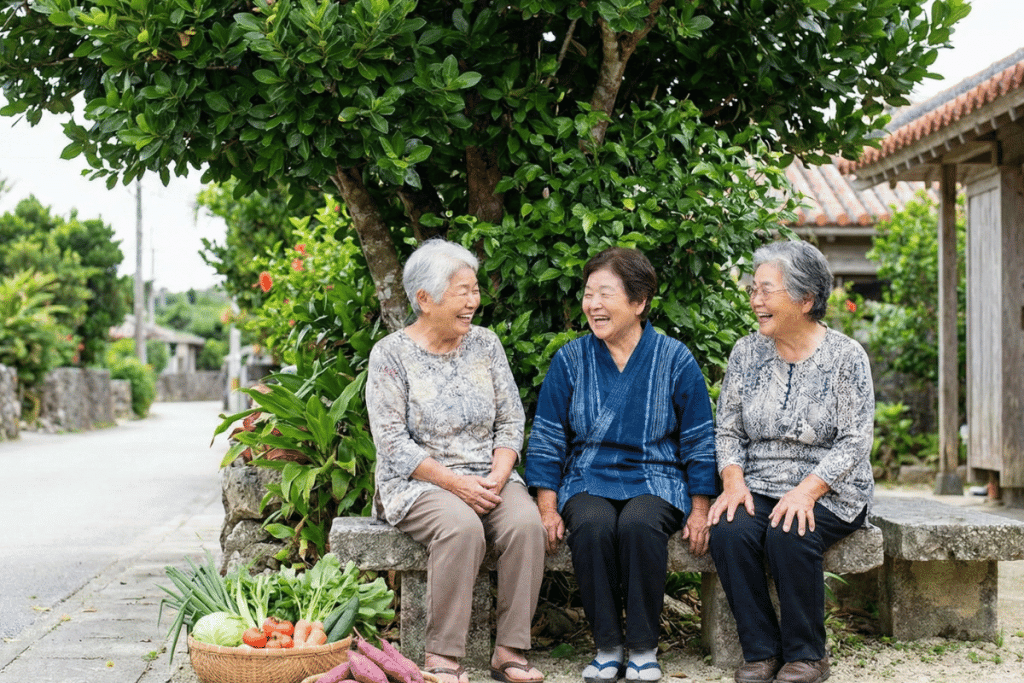
We are often told that the “fountain of youth” is found in a pill, a specific supplement, or a grueling gym circuit. But if you travel to the subtropical islands of Okinawa, Japan, you’ll find a group of people who are proving the world wrong. Okinawa is one of the world’s “Blue Zones”—regions where people live significantly longer, and healthier, than the rest of the global population.
In Okinawa, reaching 100 isn’t just a statistical anomaly; it is a common milestone. But they aren’t just “surviving” to 100; they are thriving. They are gardening, karate-kicking, and laughing with their great-great-grandchildren.
Table of Contents
- 5 Lessons from the Blue Zones: What Okinawa Taught Me About Living to 100
- Final Thoughts: The Road to 100
- Deep Dive Podcast
- Related Questions
5 Lessons from the Blue Zones: What Okinawa Taught Me About Living to 100
In 5 Lessons from the Blue Zones: What Okinawa Taught Me About Living to 100, we explore timeless wisdom from one of the world’s longest-living communities. These lessons reveal the secrets of longevity, purpose, and well-being, inspired by the vibrant lives of Okinawa’s centenarians.
At Reluctantlowcarblife, we talk a lot about our “Trifecta of Health”: eating fresh foods, eating foods that keep you full (satiety), and making movement an effortless part of your day. The Okinawan lifestyle is the living embodiment of this trifecta. Here is what we can learn from the “Land of the Immortals” about living a long, vibrant life.
1. The Power of the “Moai”: Community as Medicine
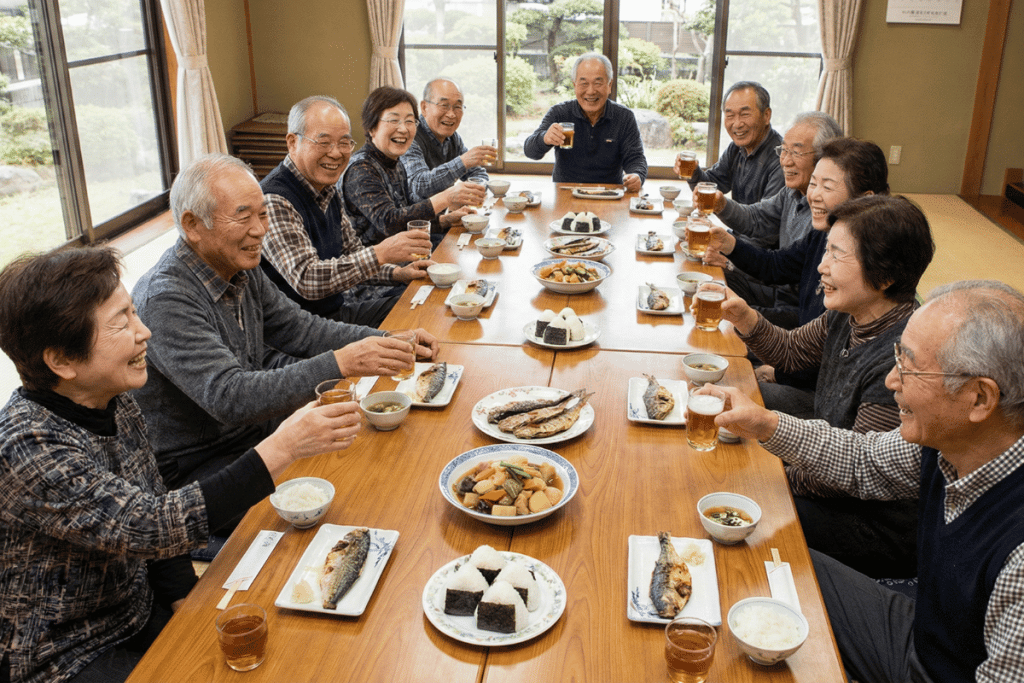
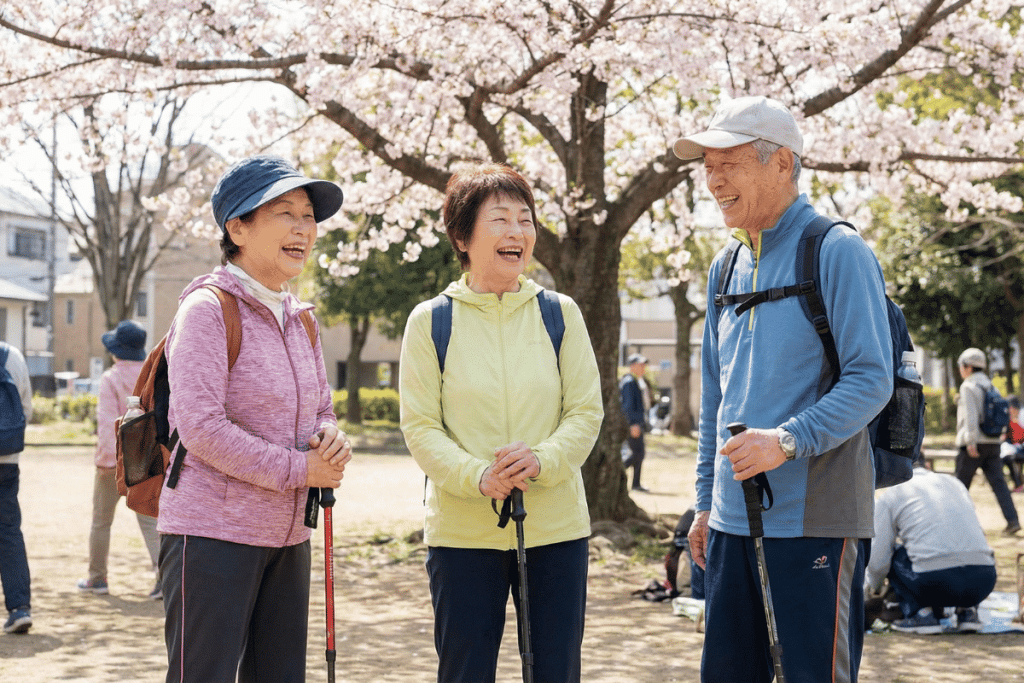
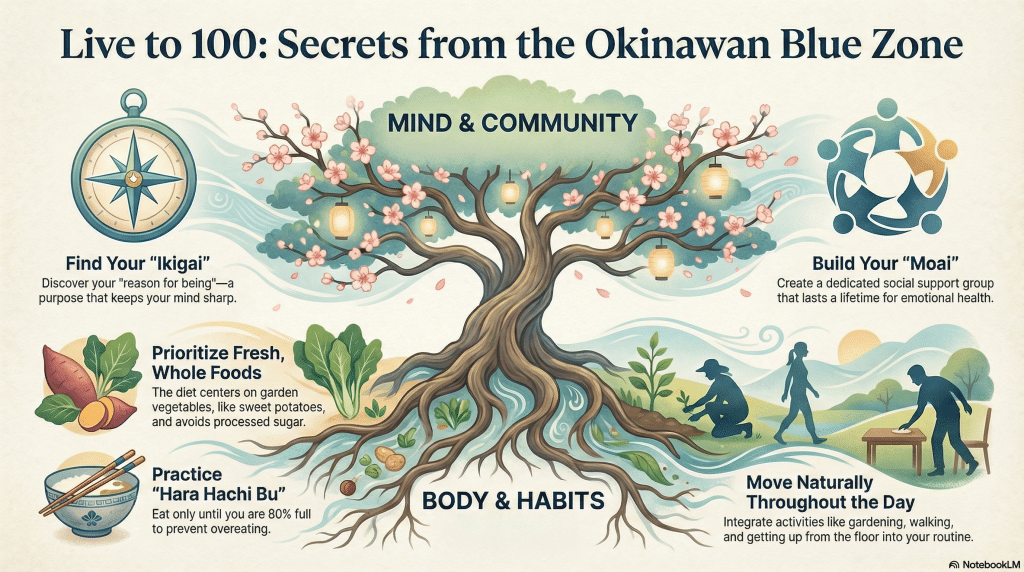
In the West, we often view health as an individual pursuit. It’s my diet, my workout, my sleep schedule. In Okinawa, health is a collective effort. One of the most vital “longevity secrets” isn’t found on a plate, but in a social circle called a Moai.
A Moai is a dedicated social support group that begins in childhood and lasts a lifetime. Historically, these groups were formed to pool financial resources, but today, they serve as a powerful safety net for emotional and physical health.
Why Community Matters for Longevity:
- Stress Reduction: Knowing you have a group of people who will show up for you—whether you need a hand in the garden or a shoulder to cry on—drastically lowers cortisol levels.
- Accountability: If you don’t show up for your daily walk or tea, your Moai will come looking for you.
- Shared Purpose: Loneliness is a silent killer, often more dangerous than smoking or obesity. The Moai ensures that no one is ever truly alone.
The Lesson: You don’t need to move to Japan to find a Moai. Build your own. Surround yourself with family and friends who support your health goals. A community that eats fresh, healthy food together stays healthy together.
2. Eating for Satiety and Vitality: The Okinawan Diet
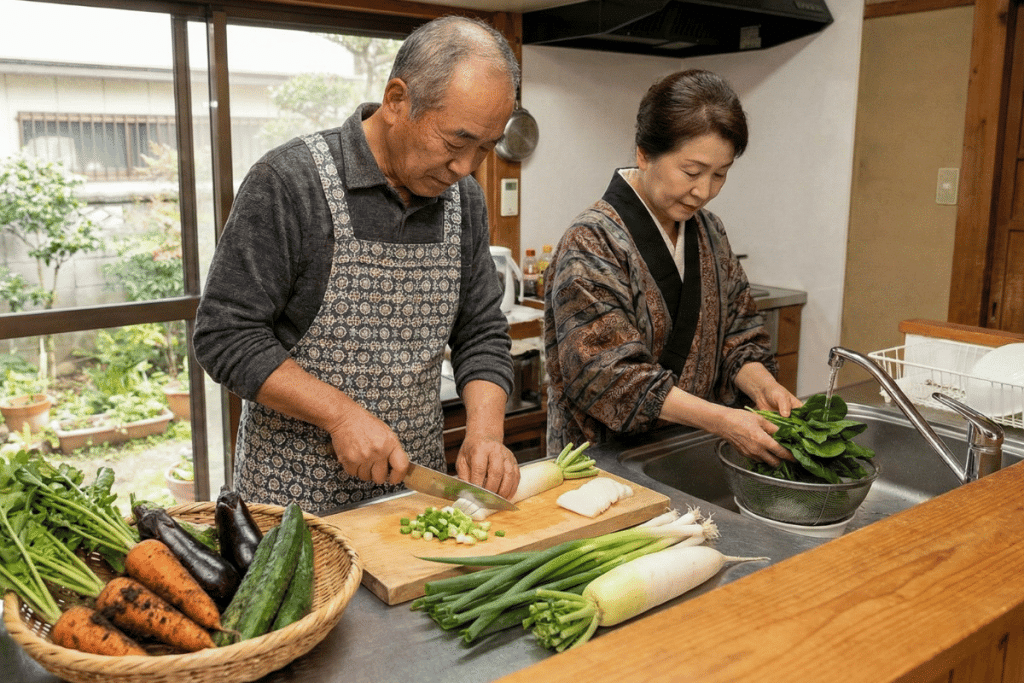
The Okinawan diet is often misunderstood. While it is high in carbohydrates (specifically the purple sweet potato), it is incredibly low in processed sugars and refined grains—the very things we fight against in a low-carb lifestyle.
For the “Reluctant” health enthusiast, the takeaway isn’t necessarily the type of carb, but the quality and freshness of the food.
The “Hara Hachi Bu” Rule
Okinawans practice Hara Hachi Bu, an ancient Confucian mantra whispered before meals. It means “eat until you are 80% full.” In our modern food environment, we are trained to eat until the plate is empty or we feel “stuffed.” By stopping at 80%, Okinawans give their brains time to receive the signal from their stomachs that they are satisfied. This prevents the “food coma” and systemic inflammation caused by overeating.
Freshness and Satiety
The Okinawan plate is a masterclass in our Trifecta of Health:
- Freshness: Most of what they eat comes from their own gardens or local markets. Bitter melon (goya), seaweeds, and soy products are staples.
- Satiety: They prioritize foods that keep them full. While they eat small amounts of pork (usually slow-cooked to rendered fat), their primary satiety comes from high-fiber vegetables and plant-based proteins.
The Lesson: Focus on high-nutrient density. When you eat fresh, whole foods that provide high satiety, you naturally stop overeating.
3. Movement as a Way of Life (Not an Errand)
If you ask a 95-year-old Okinawan what their “gym routine” is, they will likely give you a confused look. They don’t “exercise” in the way we think of it. They don’t wear spandex or go to spin classes. Instead, movement is baked into their day.
The “Natural” Fitness Routine:
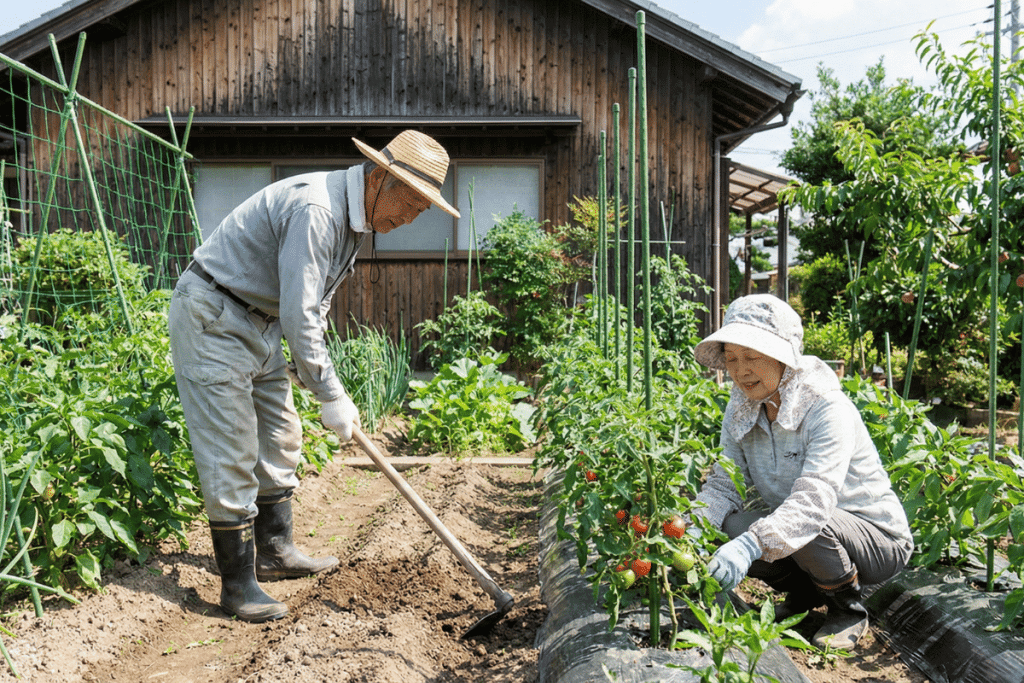
- Gardening: Almost every Okinawan centenarian maintains a garden. This involves constant squatting, reaching, pulling, and walking. It is low-impact functional strength training.
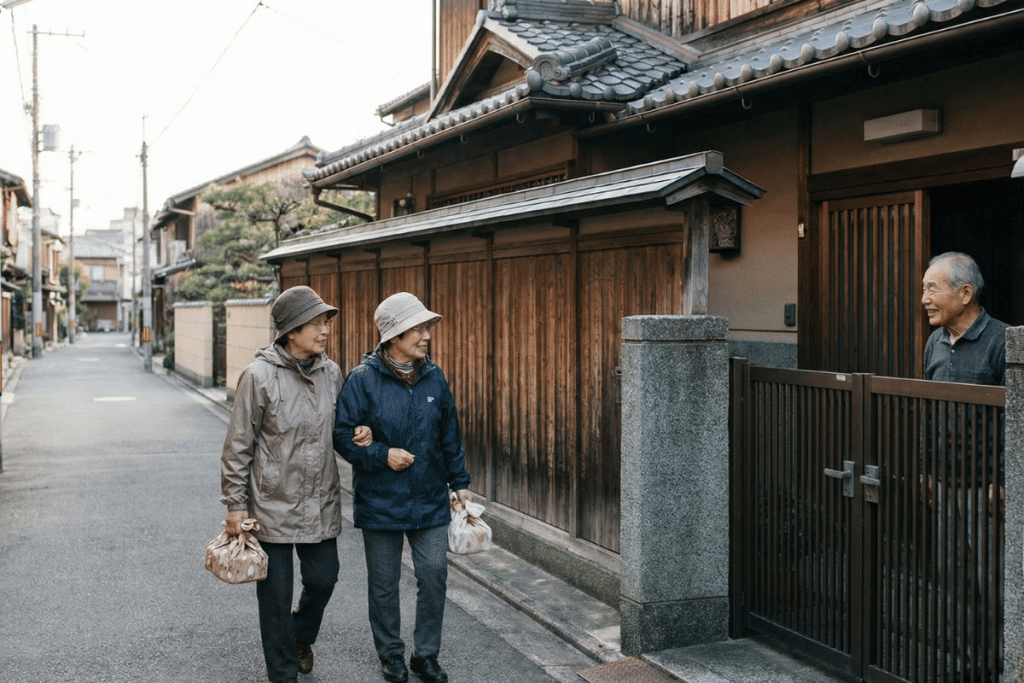
- Walking to Places: Whether it’s walking to a neighbor’s house, the market, or the Moai meeting, walking is the primary mode of transportation.
- Floor Culture: Okinawans traditionally sit, eat, and relax on tatami mats on the floor. This means they are getting up and down from the floor dozens of times a day. This builds incredible lower-body strength and balance, which prevents falls—the leading cause of injury in the elderly.
The Lesson: Stop thinking of “fitness” as a 60-minute block of time you have to suffer through. Look for ways to make movement a part of your daily life. Take the stairs, park further away, or spend 20 minutes in the garden. Consistency beats intensity every time.
4. The “Ikigai”: A Reason to Wake Up
In Okinawa, there is no word for “retirement.” Instead, they have Ikigai—your “reason for being.” It is the intersection of what you love, what you are good at, and what the world needs.
For a centenarian, their Ikigai might be teaching karate to grandchildren, weaving traditional fabrics, or simply being the spiritual head of their family. This sense of purpose is a massive driver of longevity. It keeps the mind sharp and the spirit resilient.
The Lesson: Find your “why.” Health isn’t just about looking good in the mirror; it’s about being capable enough to pursue your Ikigai.
5. Integrating the Okinawan Way into Your “Reluctant” Lifestyle
You might be thinking, “This sounds great, but I live in a city and I’m trying to keep my carbs low.” You don’t have to live in a village to adopt these longevity secrets.
The Low-Carb Connection
Many people think the Okinawan diet is a “high carb” argument. However, when you look at the nutrient density and the lack of processed garbage, it aligns perfectly with the goals of a healthy low-carb or keto-adjacent lifestyle.
- They avoid processed oils.
- They avoid refined sugar.
- They prioritize “fresh over everything.”
Your Action Plan:
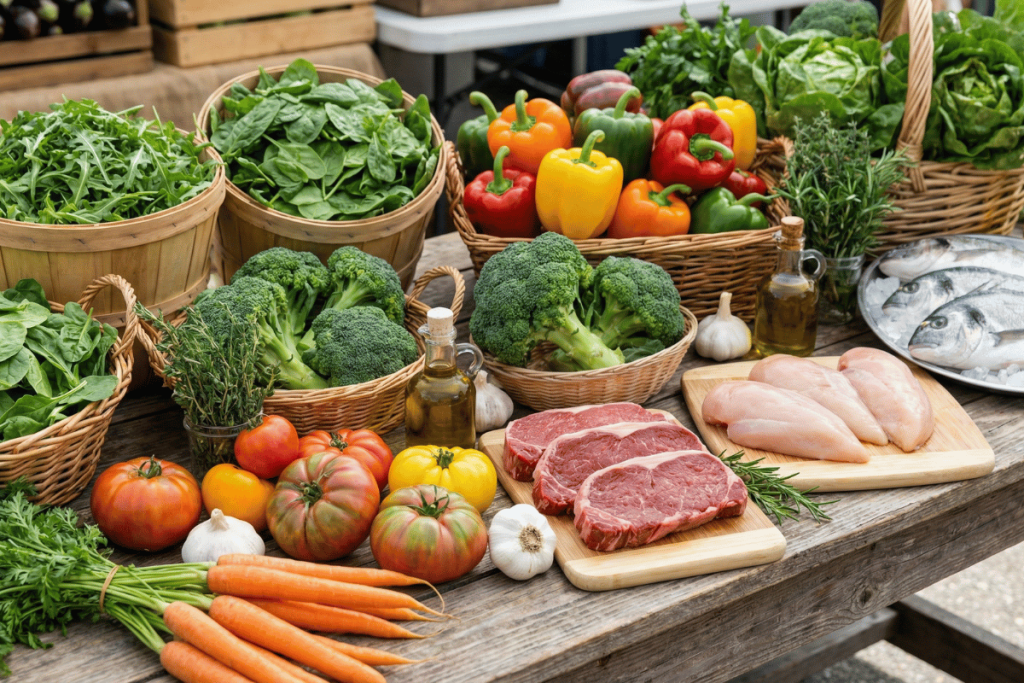
- Prioritize Freshness: Shop the perimeter of the grocery store. If it comes in a box with a shelf-life of three years, it’s not a longevity food.
- Focus on Satiety: Use healthy fats and proteins to stay full so you aren’t tempted by “boredom snacking.”
- Adopt “Stealth Fitness”: Walk more. Garden if you can. Move your body in ways that feel like play, not work.
- Invest in People: Call a friend today. Set up a regular dinner. Build your Moai.
Final Thoughts: The Road to 100
Living to 100 isn’t about luck. It’s about the cumulative effect of small, daily choices. By focusing on our trifecta—eating fresh, eating for satiety, and making movement a part of life—we can capture the essence of the Okinawan spirit.
The “dusty road” to longevity isn’t paved with expensive gym memberships or exotic superfoods. It’s paved with fresh vegetables, a walk with a friend, and the simple joy of having a reason to get out of bed every morning.
Are you ready to find your Ikigai?
Deep Dive Podcast
Check out our Deep Dive Podcast.
At Reluctant Low-Carb Life, we applaud this change and hope that it will inspire more people to take control of their health through mindful eating and a focus on nutrient-dense, satisfying foods. While there is no one-size-fits-all approach to nutrition, the principles outlined in the new food pyramid provide a solid foundation for creating a healthier, more balanced diet.
As we move forward, let’s continue to advocate for real food, celebrate the joy of cooking and eating fresh, wholesome meals, and support one another on our journeys to better health. Together, we can create a healthier future for ourselves and for generations to come.
What are your thoughts on the new food pyramid? Do you agree with the changes, or do you have concerns about certain recommendations? Share your thoughts in the comments below—we’d love to hear from you!
Reluctant Low Carb Life explores all aspects of keto and low-carb lifestyle, fitness, health, wellness, and aging gracefully. At the Reluctant Low Carb Life, we strive to give honest and accurate information to people trying to live the low-carb and keto lifestyle while improving their fitness and health.
We have a free monthly newsletter that is filled with information and helps you remain updated. Subscribe to the Reluctant Low Carb Life newsletter by clicking here.
Listen to our weekly podcast, Reluctant Low Carb Life or Deep Dive By Reluctant Low Carb Life, on all the major podcast platforms by clicking here.
Follow us on Instagram and Facebook by clicking here.
Related Questions
20 Reasons Why Swimming Is A Great Sport
We love swimming because it provides a low-impact, full-body workout that engages almost all your muscles while improving cardiovascular fitness and mental well-being. Swimming helps with weight management, enhances flexibility and posture, boosts breathing efficiency, and promotes relaxation. It’s a versatile activity suitable for all ages and fitness levels, making it easy to incorporate into your fitness regimen.
You can read more about 20 Reasons Why Swimming Is A Great Sport by clicking here.
Using MySwimPro App to Help Improve Your Swimming
Swimming, in its essence, can be a rather monotonous sport. You dive in, swim back and forth, and repeat. Without any form of stimulation or structure, it’s easy for the sport to become dull and unengaging. I’ve tried to make my swimming sessions more enjoyable by using headsets like the Ex Trainer, allowing me to listen to music or podcasts while I swim. This game-changer has made my time in the water much more pleasant. However, for those who don’t have access to headsets, swimming can quickly turn into a repetitive routine of laps.
You can read more about Using MySwimPro App to Help Improve Your Swimming by clicking here.
Swimming Vs. Walking For Weight Loss
If you’re trying to lose weight and enjoy swimming and walking, you may want to know what is better for weight loss. Both exercises can help you get fit and down to your optimal weight.
Most people will burn more calories by swimming than by walking. But whether swimming or walking is better for weight loss comes down to which exercise you will do consistently and which exercise you enjoy. People will tend to stick to an exercise they want more than one they do not like.
You can read more about Swimming Vs. Walking For Weight Loss by clicking here.



Leave a Reply
You must be logged in to post a comment.