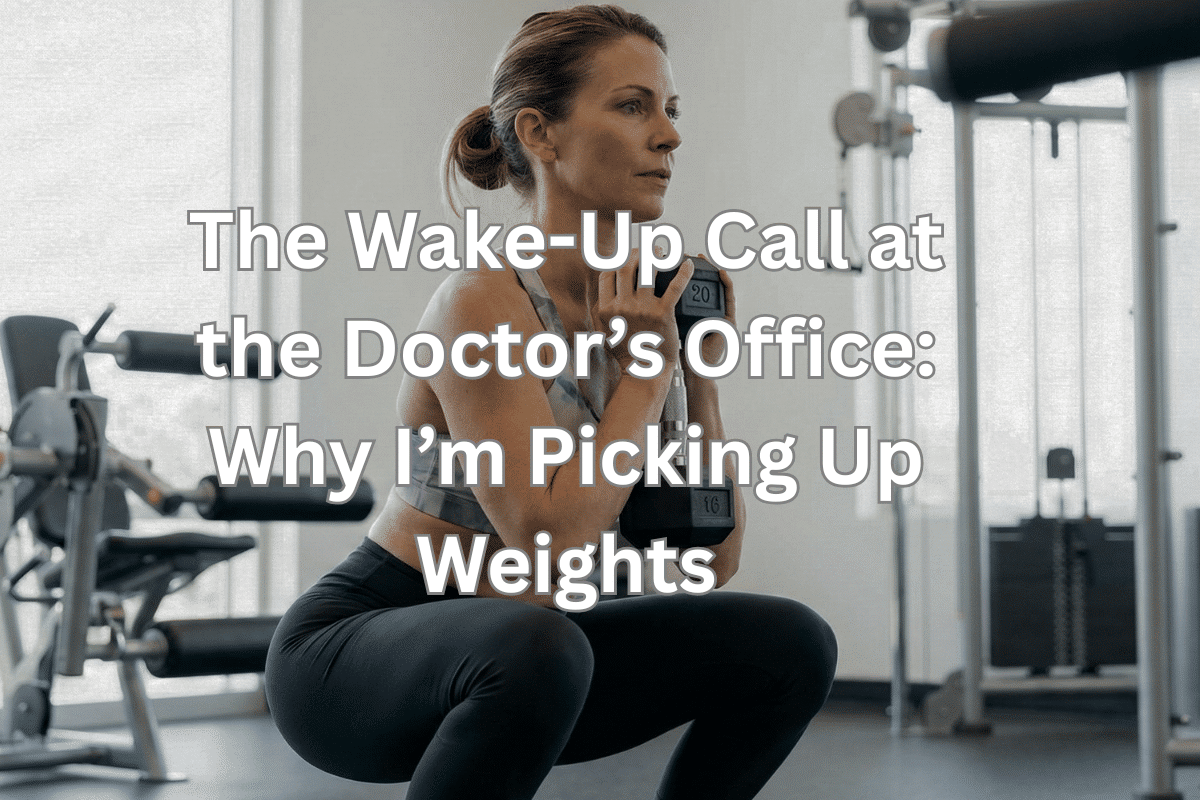
It started with a routine visit to the doctor’s office—a quick check-up I had almost forgotten about. But as I sat there, listening to my doctor talk about muscle loss, bone density, and the inevitable changes that come with aging, it hit me like a wake-up call.
The numbers didn’t lie: by the time we hit our 30s, we start losing muscle mass, and by the time we’re older, that loss accelerates dramatically. Combine that with the increased risk of osteoporosis, slower metabolism, and reduced mobility, and I realized I was on a path I couldn’t afford to ignore. My doctor’s advice was clear: start lifting weights. Not just to look better, but to feel better, to stay strong, and to maintain my independence as I age. That moment changed my perspective on fitness forever.
Table of Contents
- Key Insights on Weight Lifting and Its Importance
- The “Reluctant Beginner’s” Total-Body Lifting Program
- Deep Dive Podcast
- Related Questions
Key Insights on Weight Lifting and Its Importance
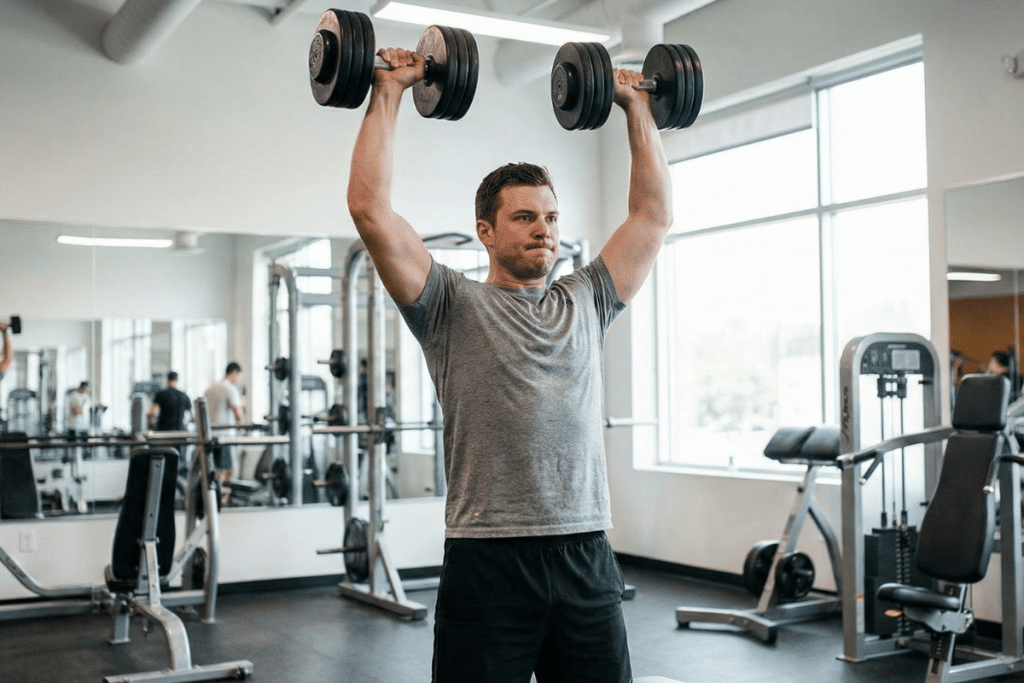
Weightlifting isn’t just for bodybuilders or athletes—it’s for everyone. It’s the secret weapon to staying healthy, strong, and capable, no matter your age. Whether you’re in your 20s or your 70s, resistance training offers benefits that go far beyond the gym. From preserving muscle and bone health to improving balance, metabolism, and overall quality of life, lifting weights is one of the most effective ways to future-proof your body.
This isn’t just about vanity or aesthetics; it’s about taking control of your health and ensuring you can live life on your own terms. If you’ve been putting off strength training, consider this your wake-up call—it’s time to pick up those weights.
The Appointment That Changed My Routine
We all have those moments in life that act as a sudden, jarring wake-up call regarding our health. Mine happened just last week, under the fluorescent lights of my doctor’s office.
I walked into that appointment feeling pretty good about myself. I try to eat well, I stay active, and I’ve been particularly diligent about my swimming routine. I love the water; it’s low-impact, meditative, and great cardio. In my mind, I was ticking all the right fitness boxes for someone my age.
Then came the bone density scan results.
I sat on the crinkly paper of the exam table as my doctor pulled up the charts. He looked at me over his glasses. “Well,” he started, in that measured tone doctors use when they have news that isn’t terrible, but isn’t great. “Your bone density numbers have shifted. You used to be in the ‘excellent’ range. Now, you’re sitting squarely in ‘average’.”
My heart sank a little. “Average” doesn’t sound bad, but when you’re used to “excellent,” it feels like a slide in the wrong direction.
He asked me point-blank: “Have you been lifting weights?”
I told him the truth. “Not really, Doc. But I’ve been swimming tons! Isn’t that enough?”
He shook his head gently. “Swimming is wonderful for your heart and lungs, and it’s great for your joints because it’s non-weight-bearing.
But that’s exactly the problem when it comes to your bones. Your bones need to bear weight to stay strong. If you want to bring those numbers back up, you need to start lifting things.”
That was it. The prescription wasn’t a pill; it was iron.
For many of us, “weightlifting” conjures images of sweaty bodybuilders grunting in a gym, tossing around barbells loaded with plates the size of manhole covers. It can feel intimidating, unnecessary, or just plain not “for us.” But as I learned in that appointment, lifting weights isn’t about becoming Arnold Schwarzenegger. It’s about building a structural foundation that will support us for the rest of our lives.
I’m taking my doctor’s advice seriously. I am shifting my focus, and I want to share why this changes everything for how we should approach aging.
Why Lifting Weights Is Essential as You Get Older
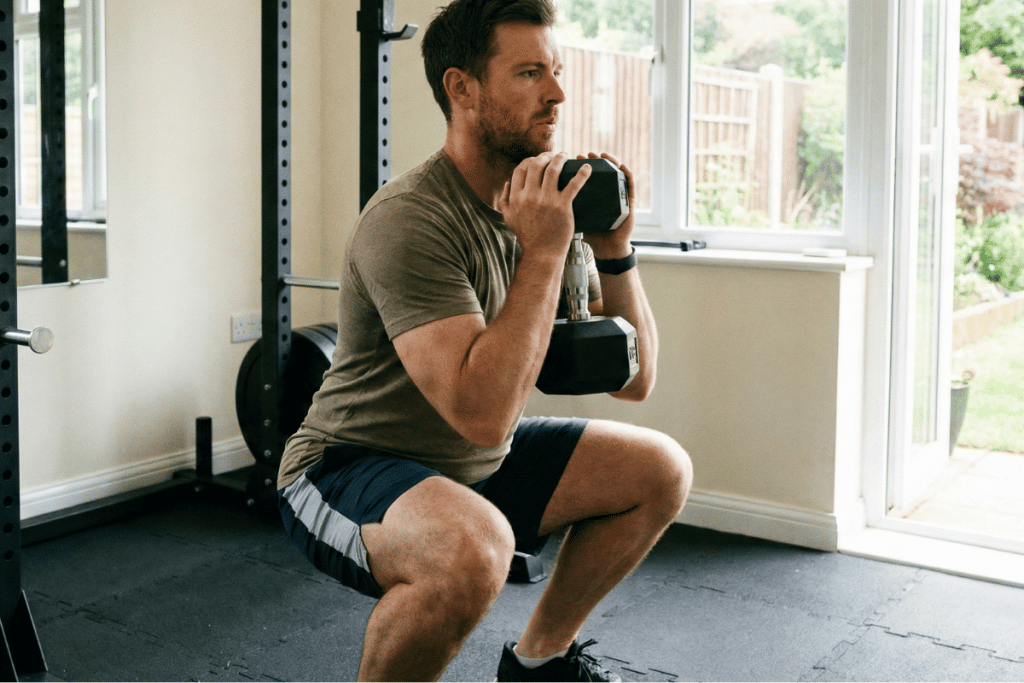
Getting older is inevitable, but how we get older is largely up to us. While cardiovascular exercise like walking, cycling, or swimming is vital for heart health, it leaves a massive gap in our physiology that only resistance training can fill.
Here is the hard truth about what happens to our bodies over time, and why iron is the antidote.
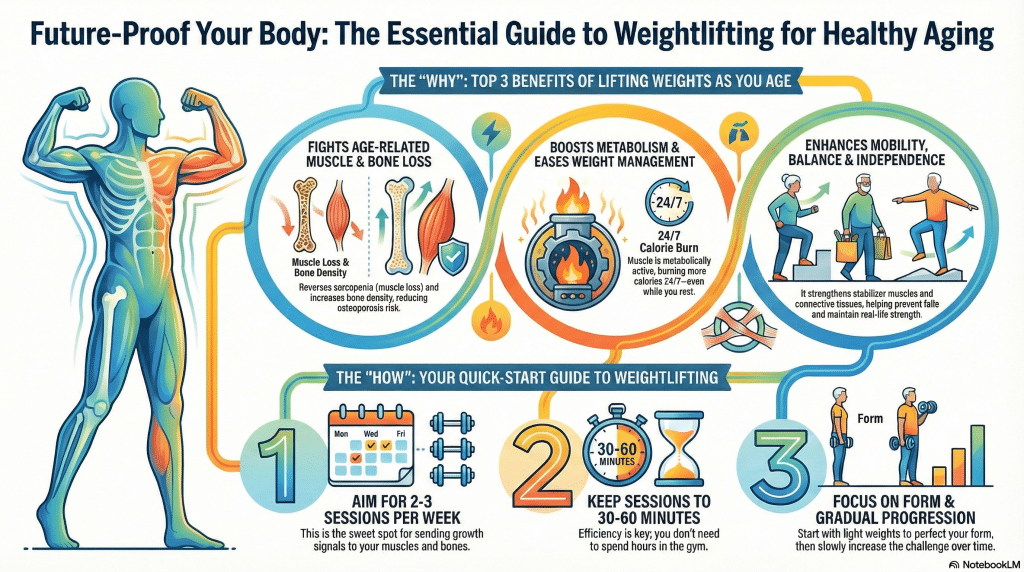
1. The Silent Thief: Prevention of Muscle Loss (Sarcopenia)
There is a biological process called sarcopenia, which is the age-related loss of muscle mass and strength. It doesn’t start when you’re 70; it quietly begins around age 30. By the time we hit 40 and 50, if we aren’t actively doing something to stop it, that muscle loss accelerates.
We don’t just lose the “look” of toned arms; we lose the functional fibers that help us stand up from a chair, carry groceries, or catch ourselves if we trip.
The good news? Muscle tissue is incredibly resilient. It operates on a strict “use it or lose it” policy. When you lift weights, you create microscopic tears in muscle fibers. Your body responds by repairing them to be thicker and stronger than before. Weightlifting doesn’t just preserve the muscle you have; it can rebuild what you’ve already lost, regardless of your age.
2. Bone Health and Osteoporosis Prevention (My Wake-Up Call)
This was the crux of my doctor’s lecture. Our bones are living tissue, constantly breaking down and rebuilding. As we age, particularly for women post-menopause due to hormonal changes, the breakdown starts happening faster than the rebuilding.
Bones need stress to trigger growth. It sounds counterintuitive, but it’s true. When your muscles contract against resistance during a lift, they pull on the tendons, which in turn pull on the bones. This physical stress sends a signal to bone-forming cells to get to work, laying down denser mineral structure.
Swimming didn’t provide that stress. Walking provides some, but not enough for the upper body or spine. Only focused resistance training provides the necessary impact to increase bone density, drastically reducing the risk of fractures and osteoporosis later in life.
3. Improved Metabolism and Weight Management
Many people, especially those of us living a “reluctant low carb life,” are concerned with maintaining a healthy weight. We often turn to cardio to burn off calories.
While cardio burns calories while you are doing it, muscle burns calories all the time. Muscle tissue is metabolically expensive; your body needs to expend energy just to keep it on your frame. By increasing your muscle mass through weightlifting, you are essentially upgrading your body’s engine. You burn more calories while sleeping, sitting at your desk, and watching TV. It makes long-term weight management significantly easier.
4. Enhanced Mobility and Balance
Falls are a major concern as we get older, often leading to life-altering injuries like hip fractures. Why do people fall more as they age? It’s rarely just clumsy feet; it’s usually a combination of weak stabilizer muscles and poor balance.
Strong leg and core muscles act as the body’s shock absorbers and scaffolding. Lifting weights strengthens the connective tissues around your knees, hips, and ankles, improving stability. Furthermore, many free-weight exercises require balance to perform, training your brain and body to work together to stay upright.
5. Better Quality of Life and Independence
Ultimately, this is what it’s all about. We don’t want to just live long; we want to live well.
We want the strength to lift our grandchildren without back pain. We want the endurance to garden for an afternoon without being wiped out for two days. We want the independence of putting our own carry-on luggage in the overhead bin. Weightlifting translates directly to “functional strength”—the strength you need for real life. It buys you years of active independence.
6. Chronic Disease Management
Beyond bones and muscles, resistance training is powerful medicine. Studies consistently show that regular weightlifting improves insulin sensitivity, which is crucial for managing or preventing type 2 diabetes. It helps lower resting blood pressure, improves cholesterol profiles, and reduces chronic systemic inflammation associated with conditions like arthritis and heart disease.
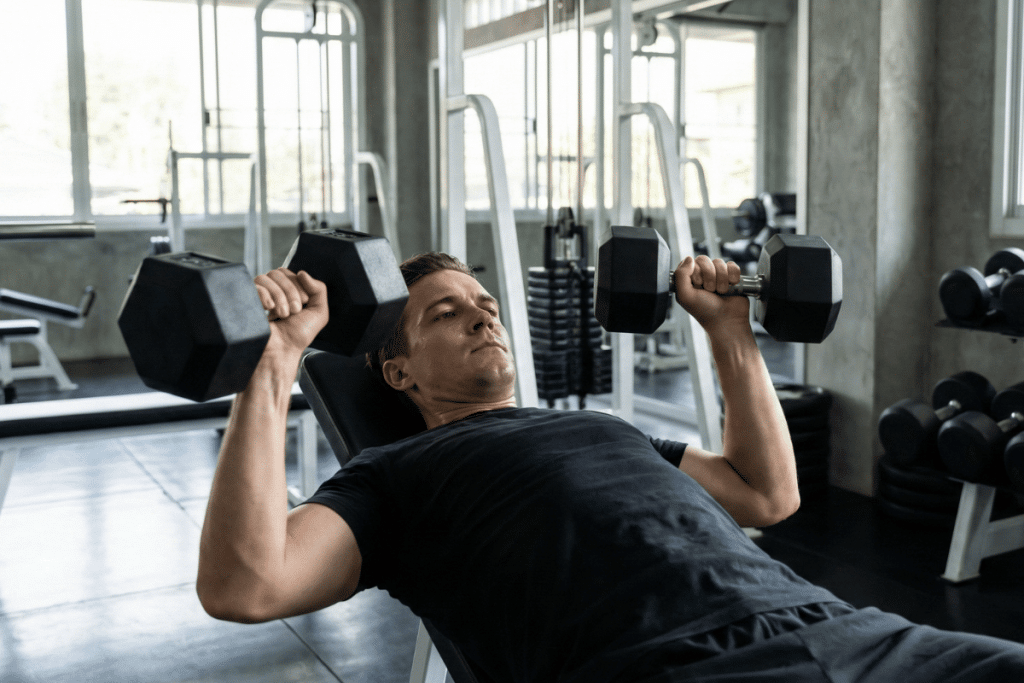
How Often Should You Lift Weights?
If you’re like me—someone who hasn’t touched a dumbbell in years—the idea of starting can feel overwhelming. Do you need to live in the gym? Absolutely not. In fact, more isn’t always better.
1. Frequency: The Sweet Spot
For general health benefits, bone density, and muscle maintenance, aiming for 2–3 times per week is the sweet spot. This is enough frequency to send those growth signals to your body without causing excessive fatigue.
If you have more advanced goals later on, you might bump that up to 3–5 times a week, but starting with two solid days is a fantastic achievement.
2. Duration: Keep It Efficient
You do not need to spend two hours lifting. An effective strength training session can range from 30 minutes to an hour. If you keep your rest periods reasonable and focus on compound movements (exercises that work multiple joints at once), you can get an incredible workout done quickly.
3. The Magic of Rest and Recovery
This is crucial, especially as we get older: our bodies need longer to repair. You don’t get stronger in the gym; you get stronger after the gym when you sleep and recover.
A good rule of thumb is to allow at least 48 hours before training the same muscle group again. If you do a full-body workout on Monday, wait until Wednesday or Thursday to do it again. Ignoring recovery leads to burnout and injury.
4. Progression over Perfection
The goal isn’t to lift the heaviest weight immediately; the goal is to lift a little bit more than you did last month. This is called progressive overload. Once a certain weight feels easy for your target number of repetitions, grab the next heaviest dumbbell.
Why Weightlifting Is the Missing Piece of Your Puzzle
Before my doctor’s visit, I thought my fitness puzzle was complete. I had the cardio piece (swimming) and the nutrition piece (low carb). I didn’t realize how big the missing piece was.
1. True Balanced Fitness
Cardiovascular health is non-negotiable, but it’s only one leg of the stool. A truly balanced body needs heart health, muscular strength, and flexibility. Relying solely on cardio is like building a house with a great electrical system but weak framing studs. Eventually, the structure will suffer.
2. Injury Prevention in Other Aspects of Life
Ironically, lifting weights makes you safer when you do your cardio. If you are a runner, stronger glutes and hamstrings protect your knees. If you are a swimmer like me, stronger shoulders prevent rotator cuff issues.
Weightlifting strengthens the ligaments and tendons—the cables holding your body together—making you more resilient against strains and sprains in everyday life.
3. Mental Health Benefits: The Confidence Boost
There is a profound mental shift that happens when you realize you are physically stronger than you were last month. There is something deeply satisfying about picking up a heavy object and moving it.
Weightlifting has been shown to reduce symptoms of anxiety and depression, improve mood through the release of endorphins, and perhaps most importantly, boost self-confidence. Feeling physically capable translates to feeling mentally capable.
Tips for Incorporating Weightlifting into Your Routine (From a Reluctant Beginner)
I am right there in the trenches with you. I am restarting my journey with weights, and here is how I’m approaching it to make sure I stick with it this time.
1. Start Small (Leave Your Ego at the Door)
The biggest mistake beginners make is grabbing weights that are too heavy because they feel silly using the light ones. No one cares what you are lifting. Truly.
Start with light weights. Focus entirely on learning the proper movement patterns (form). If you are doing a squat, make sure your form is perfect before you ever add a barbell to your back. Your joints will thank you.
2. Target All Major Muscle Groups
Don’t just do bicep curls and call it a day. A good routine should be balanced. Think about movements:
- Pushing things away from you (Chest press, overhead press)
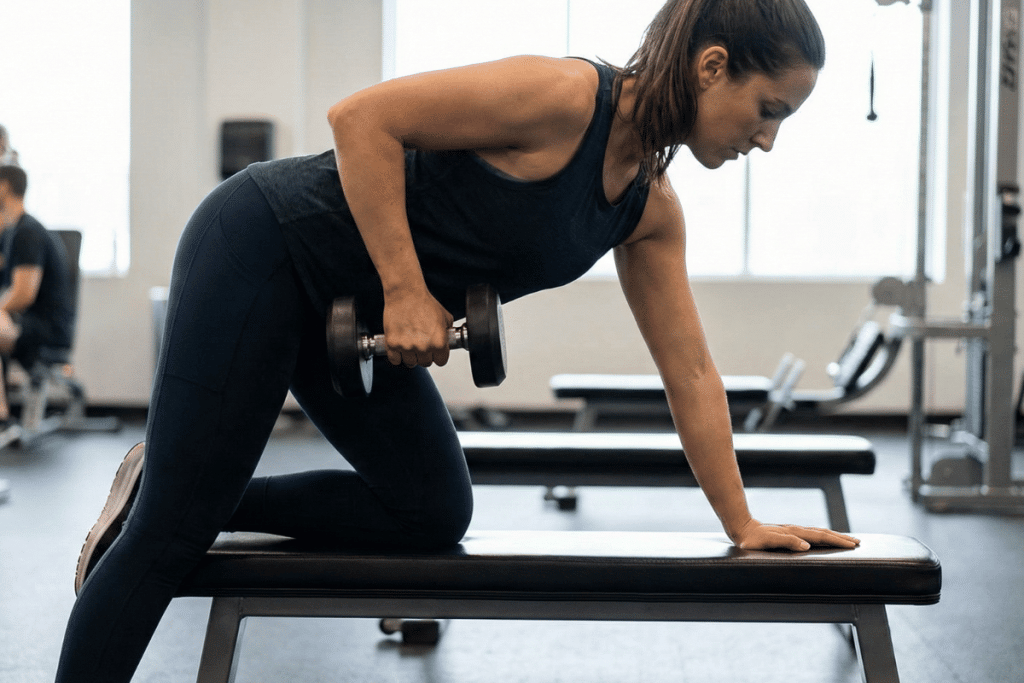
- Pulling things toward you (Rows, lat pulldowns)
- Legs (Squats, lunges)
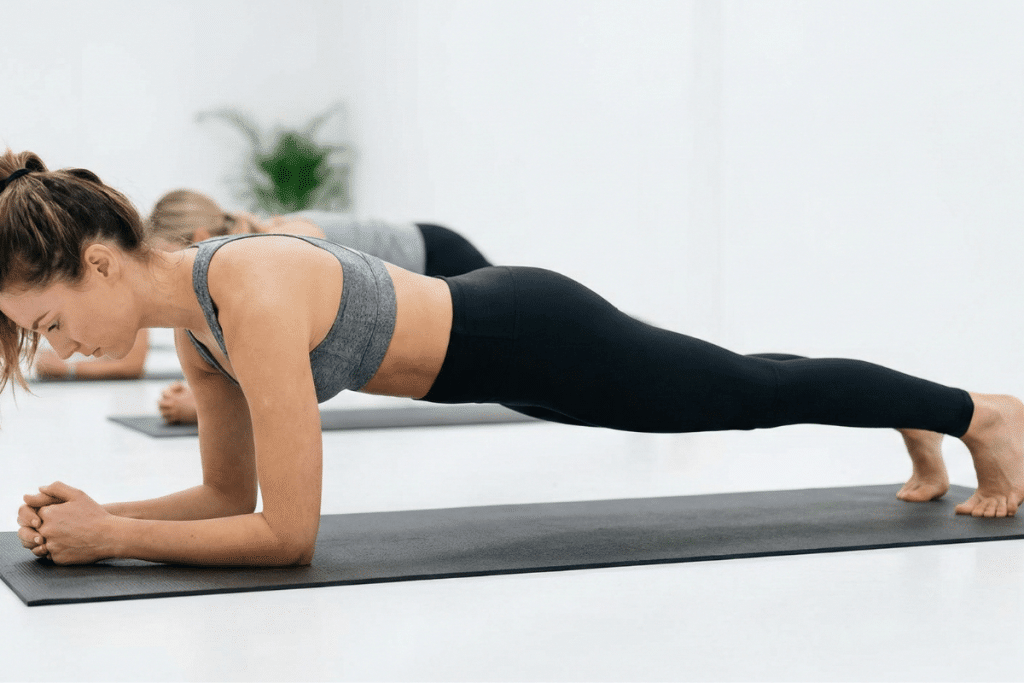
- Core (Planks)
3. Use Progressive Overload
Keep a little notebook or use an app on your phone. Write down what you did. Next time, try to do one more rep, or use a slightly heavier weight. If you don’t track it, you won’t know if you’re progressing.
4. Combine and Conquer
You don’t have to give up what you love. I am not giving up swimming. I am just swapping two swim sessions a week for two lift sessions. You can also combine them—do a 30-minute lift followed by a 20-minute brisk walk.
5. Seek Guidance if Needed
If you walk into a gym and feel completely lost among the machines, do not guess. Incorrect form is the fastest route to injury.
Consider hiring a personal trainer for just 3–5 sessions to teach you the basics. Alternatively, there are incredible online resources and apps that demonstrate proper form. Investing a little time in learning how to lift is worth it
The Pledge to Be Strong
My doctor did me a huge favor by being blunt about my bone density scan. It was the jolt I needed to move out of my comfort zone and address a vital aspect of my health that I had been ignoring.
It’s easy to get comfortable with our routines as we age. We find what we like, and we stick to it. But comfort doesn’t create change, and it certainly doesn’t build bone.
I don’t want to be just “average.” I want to get back to “excellent.” More importantly, I want to ensure that in 10, 20, or 30 years, I am still active, mobile, and unbreakable.
So, I’m picking up the weights. It’s awkward right now. I’m sore in places I forgot I had muscles. But I know that every rep is an investment in my future self. I hope you’ll join me. Let’s get strong together.
The “Reluctant Beginner’s” Total-Body Lifting Program
We designed this program for maximum efficiency. It is a simple, balanced, total-body workout tailored to hit your legs, upper body, and core in a single session. Commit to just 2–3 non-consecutive days a week to start seeing results. Ready for the complete guide? Download the free ebook below.
Deep Dive Podcast
For more information check out our Deep Dive Podcast.
At Reluctant Low Carb Life, we are staunch advocates of the Health Trifecta: Fullness, Fitness, and Freshness. Additionally, we embrace the pillars of health, wellness, and graceful aging. Our mission is to provide honest and precise information to individuals dedicated to adopting a healthy lifestyle while enhancing their fitness and well-being.
We have a free monthly newsletter that is filled with information and helps you remain updated. Subscribe to the Reluctant Low Carb Life newsletter by clicking here.
Listen to our weekly podcast, Reluctant Low Carb Life and Deep Dive By Reluctant Low Carb Life, on all the major podcast platforms by clicking here.
Follow us on Instagram and Facebook by clicking those Social Media.
Related Questions
Ultra-Processed Food Examples: What Is Ultra-Processed Foods?
Lately, there has been a lot written about the dangers of Western nations, including the United States, overeating ultra-processed foods and the effect this food can have on our health.
But the definition of Ultra-processed foods can even seem a bit fuzzy as there are so many definitions out there. We like to look at Ultra-processed foods as foods that use ingredients you are not familiar with or ingredients you would not find in your kitchen to cook with. Read on as we try to decode and explore more about what ultra-processed foods are.
You can read more about Ultra-Processed Food Examples: What Is Ultra-Processed Foods? by clicking here.
Ultra Processed Foods – Why Chicken Nuggets Are Not Food
There’s no harm in occasionally indulging, but it’s crucial to recognize that these nuggets are a form of ultra-processed food. The issue arises when chicken nuggets become a regular part of our diet or when we mistakenly assume they’re simply chunks of chicken and nothing more. Join me as we delve into why chicken nuggets are classified as ultra-processed foods and what ingredients they contain.
You can read more about Ultra Processed Foods – Why Chicken Nuggets Are Not Food by clicking here.
Ultra-Processed Foods Health Risks Explored
When you buy an egg from the supermarket, it generally makes a straightforward journey from the farm to your kitchen table. The same goes for fresh produce like apples or oranges.
However, many packaged foods undergo a far more complex process before they end up in your shopping cart. These are often what we term ‘ultra-processed foods.’ One way to identify them is by looking at the ingredient list. If it contains items you wouldn’t typically find in your kitchen pantry or appears chemically engineered, chances are you’re dealing with an ultra-processed product. Read on as we delve deeper into the world of ultra-processed foods and explore their potential risks to your health.
You can read more about Ultra-Processed Foods Health Risks Explored by clicking here.







Leave a Reply
You must be logged in to post a comment.